BUZZ
BUZZ
‘Threat to campus free speech’
Several faculty and “legal experts” at the University of Pennsylvania condemned President Trump’s September 25 memorandum regarding domestic terrorism, saying it will have a “chilling effect on free speech” on American campuses.
The memo comes just three days after an executive order designating the far-left activist group Antifa as a “domestic terrorist organization.”
Law professor Kermit Roosevelt told The Daily Pennsylvanian he expects the administration to use the memo — which, he said, “casts an unusually wide net” — as a “pretext to harass left-wing organizations and universities.”
He noted the memo “describes education as a potential medium for ‘organized campaigns of targeted intimidation, radicalization, threats, and violence.’”
History professor Jonathan Zimmerman, who’s referred to Trump as an “existential threat to democracy” and defended caught-exposing-himself-on-Zoom CNN contributor Jeffrey Toobin (the scandal was “really about [Americans’] collective unease with masturbation”), claimed the memo is part of a “recurring theme” that Trump needs to “control people’s speech and ideas.”
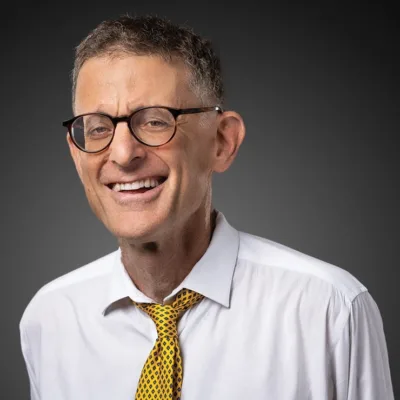
Zimmerman (pictured) recently chided the administration for its review of the President’s House Site in Independence National Historical Park. He said Trump was “cowardly” for not explicitly noting which mentions of George Washington’s slaves (noted in thirteen items at the site) are inappropriate. (Trump’s memo does not mention this aspect of the park.)
Zimmerman also took issue with the memo’s interpretation of anti-ICE and pro-Palestinian demonstrations, saying protest “is a key component of the college experience.”
“College was made for protest,” he said. “It’s been a hotbed of protest since it began. The reason [for this] is that college is supposed to expose us to new ideas and inspire us to act on them.”
(At UPenn, Zimmerman had argued for law professor Amy Wax to be sanctioned (but not fired) for her allegedly “racist” classroom comments (she was), and while at NYU he argued for repealing the 22nd Amendment so Barack Obama could run for a third term.)
UPenn law professor Claire Finkelstein, who signed on to an amicus brief against the president’s “attempt to federalize the California National Guard” over Gov. Gavin Newsom’s opposition, “hypothesized” that Trump’s use of “domestic terrorism” instead of “crime” may “give a basis for invoking federal agents … for the purpose of doing counterterrorism work.”
Finkelstein and other UPenn academics also took issue with Trump’s “emphasis” on progressive political violence, claiming that “[i]n fact, there is much more right-wing violence than left-wing violence” over the course of the country’s history.
But the study cited by The D.P. itself notes left-wing political violence is on the increase, and has surpassed right-wing violence for the first time in 30 years. Other such studies offer similar statistics; critics, however, have questioned specific definitions and time-frames.
Pennsylvania ACLU Legal Director Vic Walczak claimed there is “no basis in law for what [Trump] is trying to force institutions to do,” but noted in order to “’avoid’ the ‘fight, expense, publicity, [and] hassle’ of a long legal battle” institutions may “capitulate” (like UPenn did in July).
MORE: UPenn faculty unhappy with agreement to ban men from women’s sports