
 BUZZ
BUZZ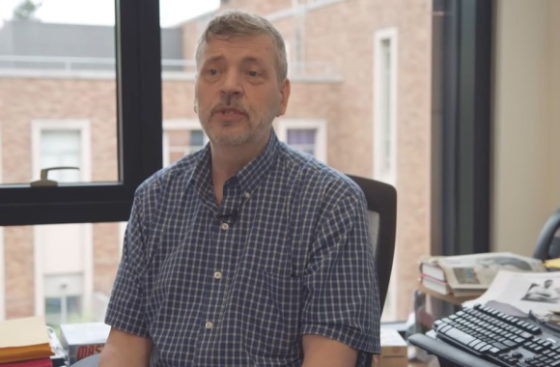
Key Takeaways
- Stuart Reges, a University of Washington professor, won a free speech lawsuit after being disciplined for including a satirical land acknowledgement in his syllabus, which criticized formal acknowledgements recommended by the university.
- The parody statement referenced John Locke's labor theory of property, leading to student outrage, the removal of the statement from his syllabus, and the opening of a different course section without him.
- The Ninth Circuit Court ruled that the university's actions violated Reges' First Amendment rights, emphasizing that discomfort with a professor's views should not justify disciplinary action.
The University of Washington professor disciplined for putting a satirical land acknowledgement in his syllabus has emerged victorious in a free speech lawsuit.
UW recommends that its instructors note they’re “teaching on the ancestral lands” of the Coast Salish, who had lived in the northeastern area of Washington.
But as noted by the Foundation for Individual Rights and Expression, Stuart Reges, who teaches computer science, criticized such acknowledgements in a late 2021 email to fellow faculty, and followed it up by inserting a parody land acknowledgement in a syllabus.
“I acknowledge that by the labor theory of property the Coast Salish people can claim historical ownership of almost none of the land currently occupied by the University of Washington,” the acknowledgement read — a reference to John Locke’s “philosophical theory that property rights are established by labor.”
After student outrage, Allen School of Computer Science and Engineering administrators had the acknowledgement removed from Reges’ syllabus (without his consent), and opened up another section of the course with a different instructor.

Allen School Director Magdalena Balazinska (pictured) said the school’s classes needed to be “inclusive environments,” and that Reges’ land acknowledgement was “inappropriate, offensive” and “dehumanizes and demeans Indigenous people.”
(Oddly, Balazinska also said Reges’ land acknowledgement was “not relevant to the content of [his computer] course” … yet one in the manner UW preferred would have been?)
Reges, represented by FIRE, ended up filing a First Amendment lawsuit, and this past week the Ninth Circuit Court of Appeals ruled in his favor.
Judge Daniel Bress said:
A public university investigated, reprimanded, and threatened to discipline a professor for contentious statements he made in a class syllabus. The statements, which mocked the university’s model syllabus statement on an issue of public concern, caused offense in the university community. Yet debate and disagreement are hallmarks of higher education. Student discomfort with a professor’s views can prompt discussion and disapproval. But this discomfort is not grounds for the university retaliating against the professor. We hold that the university’s actions toward the professor violated his First Amendment rights.
During the Reges land acknowledgment imbroglio, a member of the UW student government introduced a resolution calling for the creation of a discipline panel in which “students and staff [would] serve” with “the power to judge an action or trait to be discriminatory and to decide the proper punishment for it.”
Michael Saunders’ proposal said that UW must “think outside the lens of an oppressive system and think in a mindset of innovation, improvement, and radical change.” It further accused UW bodies that already deal with discipline matters of “not doing enough to crack down on ‘systematic oppression towards marginalized members of the community.’”
Reges had dubbed Saunders’ resolution reminiscent of “the struggle sessions of Maoist China during the Cultural Revolution.”
MORE: Free speech groups defend U. Washington professor, ‘parody’ land acknowledgement

