
 FEATURED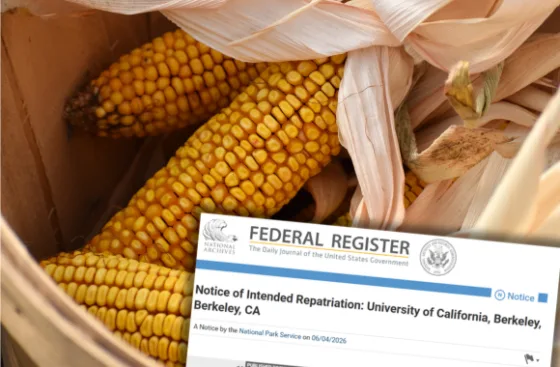
University obtained the corn, other seeds during 1940s ‘field research with Native American agriculturalists’
Old corn cobs linked to a Native American tribe are being removed from an anthropology museum at UC Berkeley in accordance with a federal “repatriation” law.
According to a June 4 federal notice, 24 items including corn, corn cobs, peas, beans, and other seeds, are being removed from the Phoebe A. Hearst Museum of Anthropology and returned to the Pueblo of Isleta, New Mexico, a Native American tribe, to comply with the Native American Graves Protection and Repatriation Act.
However, neither the university’s director for repatriation nor its media relations team responded to two recent emails from The College Fix asking for more details about the notice, including if the items had already been returned to the tribe.
The notice states that the listed items will no longer be available for public display or scientific research at UC Berkeley.
The notice also explains that the items were obtained during field research with Native Americans: “Between 1940 to 1941, George F. Carter collected 24 lots of seeds via `field research with Native American agriculturalists’ across the Southwestern United States, including Pueblo of Isleta in New Mexico.”
Isleta Pueblo tribal leaders did not respond to The Fix’s emails asking if they believed the items were obtained or treated unethically. The Fix also asked about the tribe’s plans for the objects.
The federal repatriation law, known as NAGPRA, was signed into law in 1990 to ensure protection for items that bear importance to Native American tribes. Under the law, public entities such as universities and museums must offer to return human remains and sacred objects in their collections to tribes that they are known to belong to.
These items include funerary objects, sacred objects, and objects of cultural patronage. The UC Berkeley notice states that the 24 items from its museum collection are objects of “cultural patronage” and are linked to the Pueblo of Isleta tribe in New Mexico.
According to the federal law, this means that the items were found to have “ongoing historical, traditional, or cultural importance central to the Native American group or culture itself, rather than property owned by an individual Native American.”
However, Elizabeth Weiss, professor emeritus of anthropology at San José State University, does not believe the items listed in the notice match this definition.
“Objects of cultural patrimony are defined as objects that cannot be owned by a single person, and, thus, cannot be sold or given from one person to another. It is hard for me to understand how plants and seeds could fall into this category,” Weiss told The College Fix in a recent email.
Weiss has been a vocal critic of recent regulatory expansions of the federal repatriation law. Museum and laboratory collections are being wiped out, making it nearly impossible to study American tribal history, she says.
However, UC Berkeley states in its repatriation policy that returning the items will bring about “healing.”
The policy states that “UC acknowledges that the injustices perpetrated on Native Hawaiians and Native Americans are reflected even to the present, and that as long as Human Remains and Cultural Items remain in the University’s control, healing and reparation will be incomplete.”
Weiss believes this type of policy will not fix the problems facing tribal communities.
“Real solutions to these problems are desperately needed,” she told The Fix. “Woke academics and Native American repatriation activists going after museum and university collections to ‘heal’ the serious problems in these communities are wasting their time and taxpayers’ money.”
The College Fix also contacted the office of U.S. Sen. Brian Schatz, a Democrat from Hawaii, for comment twice over the past week. Schatz is the vice chairman of the Indian Affairs Committee and a supporter of repatriation efforts.
Earlier this month, he sent letters to universities, including UC Berkeley, encouraging them to repatriate Native American objects in their possession.
The Fix asked about Schatz’s thoughts on repatriation and the critiques from Weiss and other scholars that efforts have gone too far. His media relations staff did not respond.
MORE: UMass center focuses on ‘heart-centered’ science, connections with ‘inanimate’ beings
MORE: UCLA staff ‘talk to’ lonely Native American museum pieces at tribe’s request

