FEATURED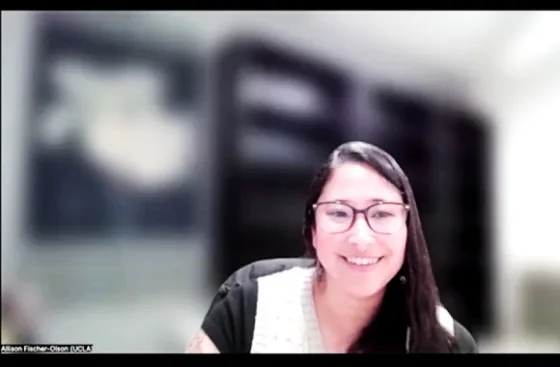
Biden era regulations tell public universities to comply with ‘tribal knowledge’
UCLA staff “visit and talk to” Native American artifacts housed by the public university because some tribes believe the inanimate objects are “relatives and shouldn’t be left alone,” an employee said Tuesday during a webinar.
Allison Fischer-Olson, the university’s repatriation coordinator and curator of Native American cultures, made the comment during a webinar about the UCLA Fowler Museum’s efforts to comply with the Native American Graves Protection and Repatriation Act.
The federal law has to do with how public institutions handle Native American artifacts and human remains in their collections.
First enacted in 1990, it initially required public institutions to offer to return Native American human remains to their descendants. However, some scholars have expressed concerns about recent regulatory expansions leading to overreach, such as with the Fowler Museum’s recent return of over 760 lots of cultural items just last month.
The Biden administration made a series of regulatory changes to the NAGPRA law in 2024, including “the introduction of the concept of duty of care,” Fischer-Olson said.
Now, public universities must “consult” tribes about “culturally appropriate storage, treatment, and handling of all ancestors and cultural items,” she said.
“We must make a good faith effort to incorporate any of these wishes articulated to us from tribes, and … we must seek free prior and informed consent prior to any access, any exhibition, any research on NAGPRA eligible ancestors or cultural items,” she said.
When asked to elaborate on what “culturally appropriate care” involves, Fischer-Olson she said tribes sometimes request that university staff “visit” and “talk to” artifacts.
“Sometimes we are asked to periodically visit and talk to cultural items that may be considered relatives and shouldn’t be left alone or be so isolated,” she said.
Tribal leaders also have asked university employees not to “open the box … unless a tribe is present,” and others prohibit anyone except tribe members from accessing the artifact even though the university owns and houses it, she said.
“We do our best to implement as much as we can …” Fischer-Olson said, adding, “Their communities know best.”
Fischer-Olson did not respond to several emails from The College Fix within the past week asking for more specifics regarding employees visiting and talking to the university’s Native American artifacts.
The UCLA and Fowler Museum media relations teams also did not reply to The Fix’s emails.
Fischer-Olson is one of three staff that the university employs to repatriate Native American artifacts. A 2023 job post for her role advertised a salary of $99,996.
As The Fix previously reported, a number of California’s public universities advertised new NAGPRA staff positions in 2024, with one offering a salary of up to $124,980.
During the webinar, Fischer-Olson said the 2024 regulatory changes also included a directive that public institutions must consider tribal knowledge as “expert knowledge.”
In other words, if a tribe says a piece in the university’s research or museum collection belongs to their tribe, the university has to trust that it does.
“Previously, we would have relied on more traditional or Western lines of evidence to determine whether or not a tribe’s claim to ancestors or cultural items was strong enough. So anthropological evidence, archaeological, ethnographic, geography … these types of very Western concepts of knowledge,” she said.
She continued, “At this point in NAGPRA, a tribe can come with their traditional knowledge that they know about the ancestor and where it came from, or the cultural items that we have in our holdings, and we can consider their knowledge to be expert knowledge.”
“That holds up, actually more strongly if you look at the regulations, than some of these previous lines of evidence that were required,” she said.
Fischer-Olson explained that “human remains,” “associated funerary objects,” “unassociated funerary objects,” “sacred objects,” and “objects of cultural patrimony” all can be repatriated under NAGPRA.
Objects of cultural patrimony, also known as cultural objects, are artifacts “that one individual within a community or a tribe would not have had the right to give away,” and that “could not be alienated by one person’s decision,” she said.
Right now, Fischer-Olson said repatriation staff at all University of California institutions are “undertaking a campus-wide search to ensure that nothing is left out in our compliance efforts.”
“Each team on each campus is literally searching every room possible to make sure that there’s nothing… we leave behind,” she said.
“I would say that it’s warranted,” she added. “Given that the regulations changed in 2024, things that were not previously considered NAGPRA eligible are now.”
“I think a lot of the times we’re finding that things weren’t intentionally left behind… but it’s just they were not NAGPRA eligible previously and they are now.”
Fischer-Olson also mentioned that “[full compliance] doesn’t necessarily mean that every single Native American item in our holdings will get repatriated.”
Earlier this month, The Fix reported about UCLA repatriating more than 700 Native American artifacts, including photo negatives, to one tribe. The university did not respond to questions about how photo negatives fall under the repatriation law, and the tribe declined to comment.
“It won’t be long until books containing images of petroglyphs are burned. To save archaeology and the knowledge of our past, NAGPRA needs to be repealed!” anthropology Professor Elizabeth Weiss wrote on X in response to the news.
In a comment to The Fix, the San José State University professor emeritus added, “Will the tribe next seek out copies of the 1973 book Prehistoric Rock Art of California that contains images of these petroglyphs, and destroy those too?”
MORE: Some California colleges ban showing Native American cultural items in class