Robby Soave - Assistant Editor

The New York Times latest series on student debt begins with the story of Kelsey Griffith, who owes $120,000 in student loans. Griffith is written as someone we should pity, because of this crippling burden she must pay. Indeed, it’s a sad story:

ADA, Ohio — Kelsey Griffith graduates on Sunday from Ohio Northern University. To start paying off her $120,000 in student debt, she is already working two restaurant jobs and will soon give up her apartment here to live with her parents. Her mother, who co-signed on the loans, is taking out a life insurance policy on her daughter.

“If anything ever happened, God forbid, that is my debt also,” said Ms. Griffith’s mother, Marlene Griffith.

Ms. Griffith, 23, wouldn’t seem a perfect financial fit for a college that costs nearly $50,000 a year. Her father, a paramedic, and mother, a preschool teacher, have modest incomes, and she has four sisters. But when she visited Ohio Northern, she was won over by faculty and admissions staff members who urge students to pursue their dreams rather than obsess on the sticker price.

“As an 18-year-old, it sounded like a good fit to me, and the school really sold it,” said Ms. Griffith, a marketing major. “I knew a private school would cost a lot of money. But when I graduate, I’m going to owe like $900 a month. No one told me that.”

But doesn’t the blame rest squarely on Griffith’s own shoulders? No one forced her to choose an extremely expensive college. No one forced her to take out the loans. Did she not bother to read what she was signing up for?

Certainly, other people deserve some blame, too. Her mother should have realized what foolishness this was. And staff members at Northern Ohio who “urge students to pursue their dreams rather than obsess on the sticker price” behaved contemptibly. But ultimately, this is a problem of Griffith’s own making.

Sure, she was only 18 at the time. But if society considers her old enough to vote, drive, live by herself, and study college-level academic material, I have a hard time believing we should also consider her mentally unready to manage her finances. The truth is that students who took out massive loans to attend super-expensive colleges, rather than affordable ones, bought into a deal that was too good to be true.

But college administrators and advisers who peddle expensive programs–especially those who urge enrollment in the very fields that do not tend toward employment–are in desperate need of a reality check.

Like The College Fix on Facebook.

{ 1 comment }

The College Fix presents a roundup of the top scandals, screw-ups, and stupid decisions involving college campuses. This week, Elizabeth Warren is not a Cherokee, and the Chronicle of Higher Education welcomes dissent, unless its readers complain. But first…

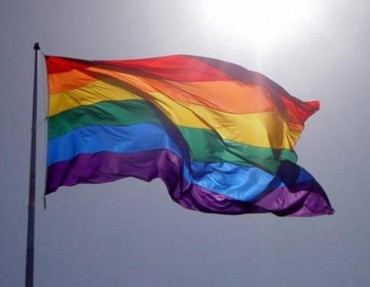
3). President Obama announced his personal support for gay marriage. Is this a campus or higher education issue? Not specifically, no. But college students, who once loved Obama but have soured toward him since the election, were showering him with praise all over again for his bold and courageous stance.

Unfortunately, the president’s stance just isn’t very bold or courageous. He only endorsed the idea of gay marriage; he favors letting states decide the issue. Gay marriage will not be part of his re-election campaign platform. He will not push the federal government to do something about gay marriage. And he waited until after the election in North Carolina to take a stance. How is any of that courageous?

If you are a college student, it’s perfectly acceptable to be glad the president shares your views on an important issue. But, as Huffington Post senior writer Radley Balko put it, Obama’s gay marriage announcement “ hardly merits a new chapter for Profiles in Courage.”

2). Professor Elizabeth Warren, the Democratic candidate for U.S. Senator in Massachusetts, was credited as a minority hire at Harvard University. For years, Warren has claimed Cherokee ancestry, but recent scrutiny of her ethnic background revealed only meager evidence that a distant, distant ancestor had ever been part Cherokee. Even more bizarre was the revelation that an ancestor of hers was involved in rounding up members of the Cherokee Tribe for the Trail of Tears.

The lesson? If you plan to claim status as a member of an ethnic minority, double check two things: One, that you actually are a member of an ethnic minority, and two, that your ancestors never forced members of that minority into homelessness and starvation.

1). The Chronicle of Higher Education fired Naomi Schaefer Riley, a conservative contributor to the Chronicle’s blog, Brainstorm. Riley wrote a post disparaging the academic field of black studies that drew outrage from members of the field. Online commenters called Riley a racist, and although the Chronicle initially stood by the post, Riley was eventually fired.

You can disagree with her argument that the dissertations of black studies students are “a collection of left-wing victimization claptrap. The best that can be said of these topics is that they’re so irrelevant no one will ever look at them.” You can argue that Riley was too quick to judge the dissertations without fully reading all of them. But do those views really make Riley a racist? (Given that she is married to a black man, as some have pointed out, this seems doubtful.)

It’s clear that the Chronicle didn’t think the post was racist–until the ire of its liberal commenters forced its hand. TCF contacted Chronicle editor Liz McMillen for clarification on which sentences in Riley’s post were objectionable. We also asked what changed between the paper’s initial defense of Riley, and its ultimate termination of her. McMillen did not respond to these questions.

Her silence earns the Chronicle of Higher Education the top spot for dumbest moment of the week.

Click here to Like The College Fix on Facebook.

{ 0 comments }

I have a new column published at The Daily Caller arguing that President Obama’s re-endorsement of gay marriage is neither bold nor politically risky:

President Obama made clear his support for gay marriage Wednesday, announcing, “I favor legalizing same-sex marriages, and would fight efforts to prohibit such marriages.”

Oops! Those were actually his words in 1996, when he was first quoted as supporting gay marriage. So why is the president being congratulated for taking a stance on marriage equality, when it is identical to his previous stance on marriage equality? Are expectations for Obama so low that when he doesn’t go back on his word, supporters count this as a success?

Now for some cynicism: If a politician supports gay marriage, then says his views are evolving, and finally supports gay marriage again, should he be celebrated for it? (Obama might have a worse grasp of what evolution entails than certain Republicans.) Not to mention that his support for gay marriage stops short of actual support, according to the explanation of his views provided by ABC News: “The president stressed that this is a personal position, and that he still supports the concept of states deciding the issue on their own.”

In other words, the president believes that states should not be able to set their own laws with respect to health care, immigration, and drug prohibition … but marriage is up to the states. This is essentially a conservative, or federalist, stance on marriage — apparently the only issue where Obama does not support a robust federal override of states’ rights. How can marriage equality activists possibly be satisfied with that?

Even more ridiculous than claims that this is a huge step forward are claims that this is a courageous and bold political risk. To this point, Frank Bruni wrote: “Hooray for President Obama, who indeed risked something today.”

What risk? About half the country supports gay marriage, as does a majority of independent voters. Gay marriage is supported by liberals, libertarians like myself, and even young conservatives. Many New York Republicans backed gay marriage. So did former Republican and current Libertarian Party presidential candidate Gary Johnson. A gay conservative group called GOProud exists. Gay marriage is gaining ground every year, in every opinion poll, among every group. Even so, the upcoming election is likely to hinge on economic and foreign policy issues, rather than social ones. Why is Obama’s qualified endorsement politically risky? Continued silence was certainly riskier.

But of course the president’s sycophantic media henchmen don’t see it that way. USA Today went with a fawning headline: “In political gamble, Obama supports gay marriage.” If the newspaper was interested in reporting the truth, it should have simply wrote, “Obama keeps original stance on gay marriage,” or, “Obama on gay marriage: Let other people figure it out,” or, “Obama’s position on marriage identical to Dick Cheney’s.”

It seems that some people cannot be dissuaded from worshiping the president, no matter how vacuously he treats their cause.

Click here to Like The College Fix on Facebook.

{ 0 comments }

Michael Patrick Leahy of Breitbart.com dropped this bombshell yesterday: Elizabeth Warren’s claim to Cherokee ancestry is false:

After researching her story, it is obvious that her “family lore” is just fiction.

As I pointed out in my article here on Sunday, no evidence supports this claim. O.C. Sarah Smith Crawford had no Cherokee heritage, was listed as “white” in the Census of 1860, and was most likely half Swedish and half English, Scottish, or German, or some combination thereof. (Note, the actual 1894 marriage license makes no claim of Cherokee ancestry.)

It gets worse (emphasis mine):

But the most stunning discovery about the life of O.C. Sarah Smith Crawford is that her husband, Ms. Warren’s great-great-great grandfather, was apparently a member of the Tennessee Militia who rounded up Cherokees from their family homes in the Southeastern United States and herded them into government-built stockades in what was then called Ross’s Landing (now Chattanooga), Tennessee—the point of origin for the horrific Trail of Tears, which began in January, 1837.

No one living today should be held accountable for their distant ancestors’ actions, of course. But Warren specifically invoked her ancestry to curry favor at Harvard as a minority faculty member. The revelation that her ancestor was not a Cherokee–but in fact, a destroyer of the Cherokee nation–is truly a fitting punishment for trying to take advantage of such a trivial, and ultimately false, claim to minority status.

Click here to Like The College Fix on Facebook.

{ 3 comments }

Like other poorly-governed cities, Providence, Rhode Island has spent itself into oblivion, faces huge budget shortfalls, can’t pay its bloated public sector employees, etc., etc. What’s a desperate city to do? Well, the piles of cash sitting atop College Hill–home of Brown University and its multi-billion dollar endowment–are looking mighty tasty. In fact, Providence may cannibalize its Ivy League school:

Brown would pay the city $38 million in property taxes each year – more than enough to solve the city’s budget problems – if only it wasn’t tax exempt.

And so city officials and state lawmakers applied some pressure to the university, and last week Brown agreed to contribute $31.5 million to Providence over the next 11 years. The money comes on top of nearly $4 million that Brown already voluntarily gives the city every year.

The town-vs.-gown confrontation reflects a trend across the nation as cities desperate for revenue try to get more money out of tax-exempt institutions such as universities and hospitals.

These institutions argue they already contribute to a city’s economy and quality of life through jobs, economic activity and community services. But as cities grapple with deficits and cash-flow crunches, they are succeeding in getting nonprofits to pay up. …

But “it is simply unfair to ask our residents and businesses to pay more and more in taxes each year, while preserving a 250-year-old special privilege for an organization with a $2.5 billion endowment,” City Councilman John Igliozzi said in January, when he introduced a resolution calling on the state to remove Brown’s blanket property tax exemption.

Really, though, that’s a false choice. If big cities could get their spending under control, they wouldn’t need to ring more money out of residents, businesses, or universities.

Click here to Like The College Fix on Facebook.

{ 0 comments }

New York Times columnist Frank Bruni wonders why American college students pick majors that are unlikely to lead them toward jobs:

I single out philosophy and anthropology because those are two fields — along with zoology, art history and humanities — whose majors are least likely to find jobs reflective of their education level, according to government projections quoted by the Associated Press. But how many college students are fully aware of that? How many reroute themselves into, say, teaching, accounting, nursing or computer science, where degree-relevant jobs are easier to find? Not nearly enough, judging from the angry, dispossessed troops of Occupy Wall Street.

The thing is, today’s graduates aren’t just entering an especially brutal economy. They’re entering it in many cases with the wrong portfolios. To wit: as a country we routinely grant special visas to highly educated workers from countries like China and India. They possess scientific and technical skills that American companies need but that not enough American students are acquiring.

I’m fairly certain the problem isn’t one of awareness. College students seem well-informed that studying sociology or literature or art is not a ticket to employment; they just don’t care. Perhaps they expect government programs and their parents’ money to take care of them not just during college, but also after.

Here is one solution Bruni proposes:

I’d go even further than he does and call for government and university incentives to steer students into the fields of studies that will serve them and society best. We use taxes to influence behavior. Why not student aid?

Really, the government already does that, except the incentives don’t necessarily direct students into majors that “will serve them and society best.” Humanities programs at public colleges are paid for, in part, by government money. Academic advisers who encourage students to study anthropology draw salaries generously provided by U.S. taxpayers.

Instead of using public money to incentivize the right majors, the government should stop throwing so much money at the wrong ones.

Click here to Like The College Fix on Facebook.

{ 4 comments }