EDITORS' CORNER
OPINION: Spent a lot of time hiding reports about genitalia drawings on walls
The media and other members of the public are now free to obtain bias incident reports from Oregon State University following a successful challenge by The College Fix.
The Fix first sought records at the end of March, looking to see about bias reports covering three semesters. The university first sought to dissuade the search by charging sky high search and response fees, $9,544.91, even though taxpayers already support the office through state and federal funding.
After negotiating and restricting the search, Oregon State charged The Fix $392.15, conducted the search, and then turned over documents that looked like a four-year-old was given a black marker and told to go to town on them.
Oregon State violated the clear intent of public records law, which is to ensure the public knows how their government is operating.
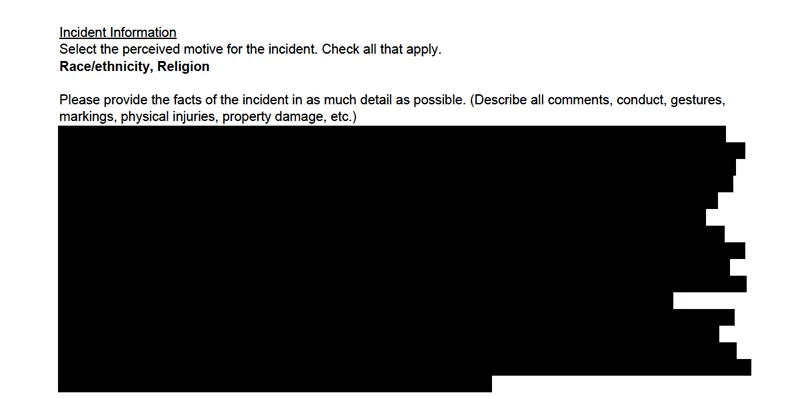
University officials argued that they had to redact all details on the bias reports, otherwise it might be possible to determine who filed the report.
The Fix appealed to the Benton County District Attorney’s office, explaining the school could do what most universities do and simply redact identifying information such as names and residence halls, along with phone numbers and email addresses.
Prior to the university fulfilling the request, The Fix had even provided public records officer Janet Harrison with a specific example of what was sought. She ignored the advice but cashed the check.
The Fix then won after this editor challenged the decision with the Benton County District Attorney’s office, defeating university counsel Kareem Walcott. Prior to joining the university in 2021, Walcott, coincidentally, had worked for the DA’s office though not necessarily on these issues.
While Walcott worked in the office, his boss, former District Attorney John Haroldson, denied a 2020 request by former College Fix senior reporter Christian Schneider for bias reports. This 2026 victory thus overturns the precedent set by Haroldson, under whom the current district attorney served as chief deputy DA.
“It is well established law that the presumption is in favor of disclosure of records to the public, barring a lawful basis for withholding the same,” DA Ryan Joslin affirmed, in response to The Fix’s argument.
“It is my decision that OSU should be required to provide the bias incident reports, including narratives, with redactions to remove identifying information of the reporting party, the offending party, witnesses, dates, times, and specific location,” Joslin wrote, reiterating The Fix has asked for.
As a result, Walcott and the university were forced to redo the reports to provide for disclosure, as required by law.
The content of the reports will be the subject of future articles. But to give a brief preview, the university spent a lot of time fighting the release of reports that included complaints about genitalia drawn on walls.
There is a larger message here for others who file Freedom of Information Act, FOIA requests, or similar inquiries for public information – appealing a decision can lead to change.
When appealing, your main goal is to force the ombudsman, in this case the district attorney’s office but sometimes called a “public access counselor,” to review the documents himself. Oftentimes universities are zealous in hiding information, either because they fear privacy lawsuits or don’t want reporters to know the truth.
However, neutral legal experts likely do not have the same fears, so angle your appeal to asking them to at least review the redactions themselves.
The Fix is not going to roll over when it comes to FOIA denials.
We defeated Michigan State University when it tried to refuse to hand over information on student fees. We defeated the Evanston Police Department when it hid its investigation into an alleged anti-LGBT hate crime. We defeated Illinois State University when it hid the details of a supposedly anti-gay hate crime (the victim wasn’t gay, he was just riding a scooter).
Universities and police agencies can try to hide information – they best be prepared for a lengthy, and unsuccessful, battle.
MORE: Journalists are the ‘transparency police’