
 BUZZ
BUZZ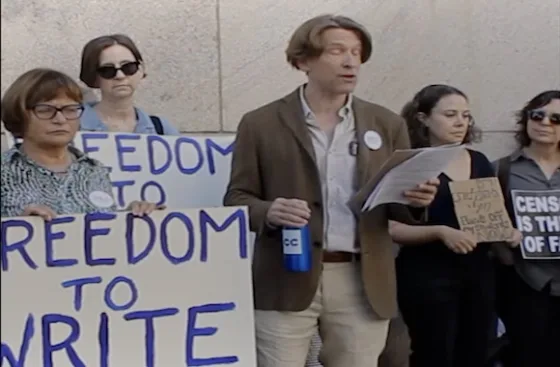
Key Takeaways
- Columbia University professors protested on the first day of classes against the school's agreement with the Trump administration, which they argue compromises academic freedom and imposes federal influence over faculty and admissions.
- The university's $200 million settlement with the federal government was criticized as it requires Columbia to provide sensitive admissions data, and professors fear it curtails their autonomy in curriculum and faculty appointments.
- Speakers emphasized the importance of free speech in academia, with specific criticisms aimed at the administration's alignment with Trump's policies and implications for scholarly expression and opposition to censorship.
- Some faculty members expressed concerns that the deal mirrors repressive conditions found in undemocratic regimes.
On the first day of classes at Columbia University last Tuesday, several faculty members spearheaded by the American Association of University Professors gathered to denounce the school’s “deal” with the Trump administration — which they say hinders academic freedom.
Ten AAUP faculty members spoke at the gathering, criticizing the $200 million Columbia agreed to pay the federal government in order to “restore ‘the vast majority’ of federal grants” and settle civil rights inquiries, the Columbia Daily Spectator reports.
The university also will make available to the feds admissions data that includes race, GPA, and test scores of accepted and rejected students.
Columbia AAUP Chapter President Michael Thaddeus told those gathered that the settlement gives the feds “‘unprecedented influence’ over faculty appointments, curriculum, and admissions.”
Thaddeus, who a year ago penned an op-ed criticizing the university’s Task Force on Antisemitism, said “Columbia needs to hear our message, and the world needs to hear our message: Academic freedom is not negotiable.”
Professor Anya Schiffrin who once claimed “the availability of guns and the virality of white supremacy” is a “hallmark” of American political culture, told the crowd “[S]peaking is like breathing. Speaking is how we circulate our ideas about what we read and what we research and what we have written.
“If we and our students cannot speak freely, then we cannot teach and learn from each other.”
Professor Rashid Khalidi also addressed the crowd, claiming that Columbia and the Trump administration don’t really want to fight antisemitism but instead “combat opposition to a genocidal war expressed by overwhelming majorities of students and faculty.”
Khalidi said he will be giving “public lectures” rather than be “subjected to potential disciplinary proceedings” which can “make your life miserable.”
Khalidi recently canceled his Middle East history course in a show of opposition to Columbia’s Trump deal. He also had chided the school’s pre-Trump-deal decision to adopt the Holocaust Remembrance Alliance’s definition of “antisemitism,” and at the rally he told the Spectator the definition “protects Israel from criticism and protects Zionism from criticism.”
Khalidi and adjunct Thanassis Cambanis compared the current conditions of academic freedom at Columbia to the “repressive conditions in undemocratic nations.” Cambanis claimed that having to swipe an ID card to get in an out of (campus) buildings “feels very much like the policing of thought.”

