
 BUZZ
BUZZ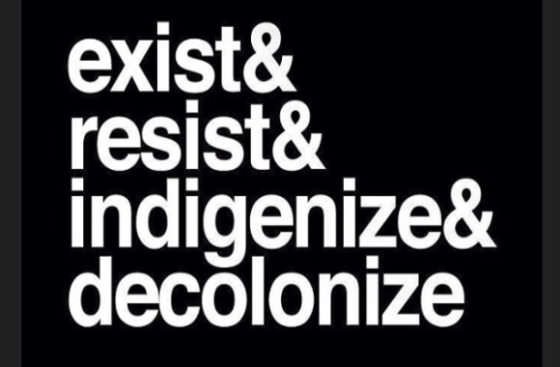
Led by an EdD who creates trainings that ‘re-center advancement and integration of Indigenous […] scientific and cultural knowledge systems’
The Concordia University Centre for Teaching and Learning is hosting a workshop this coming Wednesday on how to “decolonize” curriculum and pedagogy.
According to the event description, the seminar will “introduce faculty” to methods by which they not only can decolonize, but “Indigenize,” their various curricula.
Among other things, decolonization challenges “the belief that European writers, artists, or ideas are better and more important than ones from countries that were colonized (controlled) by Europe.”
Indigenization is “a process of naturalizing Indigenous knowledge systems and making them evident to transform spaces, places, and hearts.” In this case, Concordia faculty will be shown how to “realign” their curricula “in ways that respectfully integrate Indigenous theories and pedagogical practices across academic disciplines.”

Workshop speaker Donna Kahérakwas Goodleaf (pictured) is the Indigenous Curriculum and Pedagogical Advisor for Concordia’s Centre for Teaching and Learning.
According to her faculty page, Goodleaf is a “Turtle Clan” and citizen of the Mohawk Nation, part of the Iroquois Confederacy (which, according to the New York State history curriculum, played a big part in the development of the United States government during the founding era).
Goodleaf’s “primary role” at Concordia is to create trainings that “re-center the advancement and integration of Indigenous peoples’ diverse humanities — intellectual, scientific and cultural knowledge systems, worldviews, epistemologies, histories, research and pedagogies across all academic units.”
Although details are sparse on the workshop’s event page, the Centre for Teaching and Learning has an entire page on its website devoted to the topic. Some of the strategies include:
- “interrogating and reconceptualizing your curriculum in ways that restore and renew and re-center Indigenous histories, epistemologies, knowledge systems in respectful and meaningful ways”
- “acknowledg[ing] and giv[ing] recognition to cultural protocols of place” — this essentially means giving a land acknowledgment and noting “what it it means” to be a “settler” (unless you’re Native American, of course).
- asking yourself “How do I authentically, ethically and respectfully design my course syllabus in ways that reflect the voices and lived experiences of Indigenous peoples from multiple lenses?”
The page also offers a template of sorts for Indigenizing engineering courses, and a link to the University of Manitoba course “Contemporary Topics in Engineering Practice: Decolonizing and Indigenizing Engineering.”
One aspect of this course is learning from the “knowledges and experiences” of Indigenous tribal “Elders” and “Knowledge Keepers.” Students also will learn about “traditional Indigenous technologies” and will “coalesce” Indigenous “ways of knowing” together with Western scientific methods.
The concept of decolonization at colleges is hardly new; the University of Minnesota offers the course “Intersectional and Decolonizing Approaches to Transgender Health,” the University of Alberta has a provost fellow in “Decolonizing Policies,” and physics students at Pomona College had to complete a ‘Decolonizing Physics’ project.
MORE: Universities teach students how to ‘decolonize’ their Thanksgiving

