
 FEATURED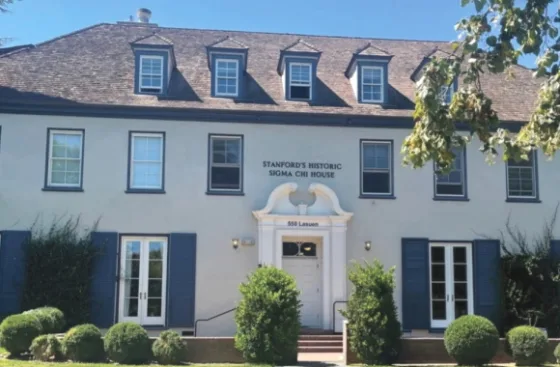
Stanford University is facing backlash for rejecting both state and federal recognition of a house it owns on campus that formerly honored Kenny Washington, who became the first student of color ever pledged by Sigma Chi Fraternity nationally.
The historical designation marks the 1965 moment when Stanford students defied the fraternity’s longstanding whites‑only policy, a decision that led to the chapter’s suspension, according to Sigma Chi at Stanford University’s Alpha Omega House Corporation.
The students at the time drew national attention to the issue, which led to major civil rights reforms to end discrimination in all student organizations.
Supporters who say Stanford should accept the historical designation argue the issue is about more than a marker, that Stanford’s actions risk erasing a key moment when students challenged racial exclusion on campus.
They note that federal officials have confirmed the site’s eligibility, yet the university has given no indication it will revisit the decision.
“Stanford not only refuses to place the federal plaque on the building (or allow the property to be listed in the actual National Register), but took the inexplicable step of tearing down all prior recognition that had been created by students and alumni over the years,” said attorney Bob Ottilie in a letter to The College Fix.
In an interview with The College Fix, Ottilie, who joined Stanford’s Sigma Chi chapter in 1970, said the university’s previous administration was responsible for opposing the historic designation. He said he hopes the new leadership will reconsider.
Stanford’s media relations team did not respond to The College Fix’s requests for comment.
But in a 2023 memo, campus leaders said that “Stanford’s professional heritage preservation staff reviewed the nomination and researched the historical context around it.”
“[T]he findings of the review suggested that Sigma Chi’s action in 1965, while praiseworthy, was not sufficiently groundbreaking either nationally or at Stanford to warrant a national historic designation for the 550 Lasuen house.”
Even though the house sat on Stanford’s campus, the university only owned the land underneath it, while Alpha Omega Housing Corporation owned the structure itself.
Currently the house itself is embroiled in a lawsuit, as Sigma Chi claims the university wrongfully took ownership of the fraternity house in a breach of contract, the Stanford Review reported.
The lawsuit followed years of turmoil and a lengthy suspension of the Stanford chapter.
According to reporting from the Review, the alumni group claims the university violated the Founding Grant and improperly seized a privately funded property worth more than $30 million. Stanford denies the accusations and says the lease ended according to a settlement agreement.
Ottilie told The Fix the dispute over historic recognition is separate from the lease‑related lawsuit. He said the two matters are unrelated and explained that the recognition issue has its own history and context.
The university gained full control of the Sigma Chi house in September 2023 when it ended an 86‑year ground lease with the Alpha Omega Housing Corporation, the alumni group that owned the building, according to Palo Alto Online.
Shortly after taking full control of the property, Stanford removed the Washington plaque along with other civil rights‑related displays.
According to James Gabbert, a senior historian at the National Register of Historic Places, Stanford also filed formal objections at both the state and federal levels and later submitted a petition through a Washington, D.C. law firm urging officials to halt the nomination.
Before the takeover, the corporation had applied to list the house on the National Register of Historic Places because of its civil rights history. The California Historic Resources Commission approved the nomination, but Stanford opposed it.
The dispute has intensified this year as criticism continues to grow.
A Stanford Daily op‑ed accused the university of “concealing its own Civil Rights history” by removing the plaque and opposing the designation, adding to concerns raised by alumni and students after federal officials confirmed the site’s eligibility.

