
 BUZZ
BUZZ
ANALYSIS: Comments were just ‘part of the broader political conversation of the time’
The Harvard Crimson yet again has decided whose speech merits protection, and as you might surmise it doesn’t belong to someone on the right.
Its latest editorial defends Gregory Davis, the resident dean of Dunster House, whose past controversial social media remarks recently were unearthed.
Davis had suggested Donald Trump was the “worst of Nixon and Hitler” (2016), said “whiteness is a self-destructive ideology that annihilates everyone around it” (2019), claimed looting and rioting were part of a democracy akin to “voting and marching” (2020), and said he doesn’t blame people for wishing ill upon Donald Trump (complete with a “fuck that guy” and Ivan Drago “Rocky IV” GIF of “If he dies, he dies“).
Davis also told anyone with “cop friends” to pressure them to quit as they’re “racist” and “evil.” His most recent social media post read “Wishing everyone a great Pride. Remember to love each other and hate the police.”
The Crimson editors note “Davis has since expressed regret for any harm his comments may have caused — but, in any case, participation in past political discourse should not disqualify him from continuing to hold his position.”
“A number” of the dean’s posts “were part of the broader political conversation of the time, at the height of the Black Lives Matter movement,” the editors continue, noting they would not call for a conservative dean to be fired if he had “criticized” BLM.
‘Participation in past political discourse should not disqualify him’
“[I]t would be foolhardy to fire an employee on account of now-harmless past comments dug up by a politically prejudiced website,” the editors conclude in part.
This is the same paper which poo-poohed a blatantly antisemitic Instagram post by a pair of campus pro-Palestinian organizations (one of which was a faculty/staff group), and said Riley Gaines didn’t deserve an audience regarding the discussion topic of biological men playing in women’s sports. (Wasn’t that “part of the broader political conversation” … as it is now?)
And don’t forget how the Crimson editors bemoaned how conservatives were “weaponizing” charges of plagiarism when now-former Harvard President Claudine Gay was under scrutiny.
Furthermore, one of the Crimson’s own felt the need to object on this particular matter.
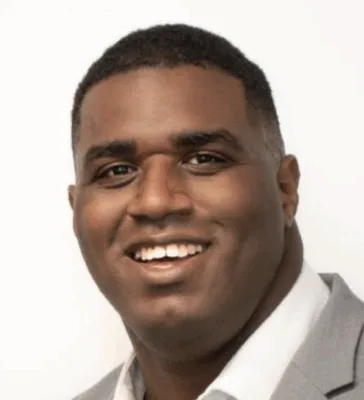
Henry Moss IV writes in a “dissent” that Dean Davis’ (pictured) past remarks “should have disqualified him from his position in the first place”:
[B]ecause of a resident dean’s unique role in student life, one must consider the effects that their political pronouncements — especially extreme ones — might have on students’ ability to fully rely on them when determining what is acceptable for them to publicly proclaim.
Advocating hate surely is not […] That those who hired Davis as resident dean somehow missed his public posts, considering his hiring occurred well after Harvard was thrust in the public spotlight as a leftist cesspool, and even after Harvard publicly adopted its policy of institutional neutrality, is a damning indictment on the hiring process for University leadership positions.
Moss wonders if the Crimson editors would support a resident dean who had espoused hatred for immigrants (he doubts it), so imagine a student in Dunster House whose relatives are involved in law enforcement. Think he would be inclined to seek out Davis … let alone trust him on any matter?
“I thought this would be an easy thing for the Board to say,” Moss concludes. “Disappointingly, it is not.”
MORE: Harvard Crimson urges student activists to break the law because they’ll get away with it

