FEATURED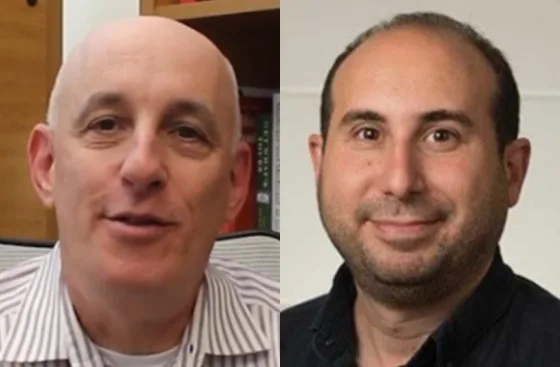
Colleague claims Professor Richard Himelfarb discriminated against him because of his accent
Hofstra University Professor Richard Himelfarb is facing a second complaint this summer for speaking publicly about an internal harassment investigation that began after a colleague accused him of discrimination for using the term “word salad.”
In an exclusive phone interview with The College Fix, Himelfarb said he had “no interest” in retaliating against fellow Professor Santiago Slabodsky when he spoke publicly about the investigation, and he was just defending himself.
Himelfarb said his university, located in Hempstead, New York, is going through a “very difficult time right now” with student enrollment in the liberal arts declining, and it saddens him that the school is “employing its limited resources to prosecute me because I exercised my right to free speech and academic freedom.”
The situation started last November when Himelfarb referred to Slabodsky’s proposal for two new Jewish courses as “word salad” at a faculty meeting.
Later, Slabodsky filed a harassment complaint against Himelfarb alleging he discriminated against his “accent, native language, and Latino identity,” as previously reported by The Fix.
On June 30, Himelfarb was notified by his university’s Vice President of HR Denise Cunningham of a second “public retaliation” complaint Slabodsky filed against him, he told The Fix.
In Slabodsky’s new complaint, which Himelfarb shared with The Fix, he claims Himelfarb “chose to retaliate against me by publicly disparaging my complaint in the media. He also turned to an external organization that published my complaint across multiple social media platforms and … released a letter identifying me by name.”
The complaint does not name the “external organization.” However, it appears to be referring to the Foundation for Individual Rights and Expression, a campus legal and free speech organization that has been urging the university to drop its investigations against Himelfarb.
Additionally, it claims that Himelfarb violated “Hofstra’s regulations” that require “confidentiality and discretion … at every step of the process so as not to interfere with the proceedings.”
The complaint also alleges Himelfarb’s response to Slabodsky’s initial complaint has led to articles that contain “misleading information and half-truths,” which have caused “reputational harm.”
Slabodsky’s complaint says his goal with the first complaint was to get Himelfarb to “stop his harassment and to protect my academic freedom based on my professional expertise.”
The Fix contacted Slabodsky on Aug. 3 to ask for his perspective on the situation. The Fix received an automated email response stating he was out of reach until Aug. 31 due to “travelling for research and lecturing commitments.”
Notably, Himelfarb previously said he agreed to apologize for offending Slabosky but later learned that his university’s Harassment Review Board began investigating him. He believes the actions against him are due to his conservative political views.
Meanwhile, the Foundation for Individual Rights and Expression is urging the university to drop both investigations.
FIRE Faculty Legal Defense Manager Graham Piro told The Fix in a recent email that the second investigation “sends a chilling message to the rest of Hofstra’s campus: If you try to defend your rights, you risk further punishment.”
Piro said Himelfarb was trying to “vindicate his rights in the court of public opinion.”
In a July 30 letter to Cunningham, the university HR representative, FIRE accused university leaders of “punishing Himelfarb for attempting to defend himself from a spurious allegation that threatens his career at Hofstra and will chill his future speech.”
The free speech group called the second complaint “egregious,” adding that it shows the university is a place where speaking up about rights violations “results in punishment.”
Himelfarb told The Fix Hofstra’s American Association of University Professors union has done the “absolute minimum” for him and not a single member of their leadership has contacted him at any point during the controversy to “express sympathy or support.”
Union regulations require the AAUP to provide Himelfarb with legal assistance. However, he said the attorney he was provided told him that she does not represent him, but represents the interest of the union.
In their last meeting together, Himelfarb said she told him that Slabodsky was also provided with an attorney funded by AAUP who works at the same law firm. He said he was asked to sign a waiver to give the firm the right to represent both of them, but he thought it was a “conflict of interest” and did not sign.
The university AAUP chapter declined to comment when contacted by The Fix, stating, “At this time, it is not appropriate for us to comment on a pending case.”
The university media relations office did not respond to two requests for comment on the situation and FIRE’s letters.
Himelfarb is now being represented by the Academic Freedom Alliance pro bono, a legal organization dedicated to protecting academic freedom.
Earlier this month, he told The Fix that his hearing was a closed session on Aug. 11 for the first complaint.
For the second case, he said “we don’t know” when a hearing will take place, and the university has been “incredibly opaque.”
He said that when he was notified of the second complaint on June 30, the HR leader said he would be contacted later to schedule a hearing. During his Aug. 1 phone interview with The Fix, he said nobody has gotten back to him on the “status of the second complaint” yet.
When asked if he plans on pursuing legal actions against Hofstra, Himelfarb said, “I am considering all of my legal options.”
He said he plans to continue working at Hofstra after his case is over until he feels “financially secure enough to retire.”
“I’m going to stay, and I’m going to fight for what’s right, I’m gonna fight for my right to free speech, and I’m not going to allow myself to be bullied by Hofstra University,” Himelfarb said to The Fix.
Himelfarb also noted how he feels about Slabodsky and his university.
He said his initial “word salad” comment was the only time he’s ever interacted with Slabodsky and that he has “no relationship with him.”
Himelfarb said that he thinks he “understand[s]” Slabodsky and that there “are going to be people in the world who have his view, who will become upset in the way that he has and will deal with a set of circumstances in the way that he has.”
He said he does not have an issue with him, he has issue with “the fact that [Hofstra] has given this whole matter the credence and importance it has.”
He said the university at any point in time could have said, “No, this does not rise to the level of harassment under Title VI of the Civil Rights Act. We’re not going to let this go forward,” but at every point has decided to pursue an investigation.
Ever since this case has been publicized, Himelfarb said he has learned more about the state of the academy in America.
He said he has met more people who have told him that what happened to him is “going on all over America.”
“This really speaks to just larger conditions in the academy, particularly involving people who are conservative and people who are Zionists,” Himelfarb told The Fix.
He previously told The Fix that believes he has a “target on his back” because he is conservative.
Editor’s note: This article was updated to include a response from the Hofstra AAUP chapter.
MORE: Hofstra U. relocates Thomas Jefferson statue, student activists remain unsatisfied