FEATURED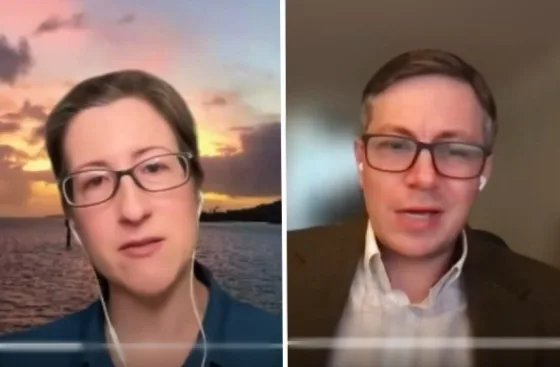
Academia benefits from ‘kaleidoscope of perspectives,’ University of Hawaii professor says
A sizable minority of college faculty are not regularly engaging with people who disagree with them, a recent national survey found.
Heterodox Academy, an organization advocating for viewpoint diversity in higher education, conducted the survey, which examined professors’ opinions on the benefits of hearing opposing views for their field. They partnered with NORC at the University of Chicago. The responses drew from 3,563 faculty members from a variety of public and private universities across the country.
Despite resounding vocal acknowledgement of the importance of diversity of thought, the survey showed a large minority of university faculty do not robustly practice it. “Nearly 30% of faculty report not regularly engaging with anyone who disagrees with them on substantive issues in their discipline,” the survey stated.
In an Aug. 19 webinar about the survey, Ashley Rubin, a University of Hawaii sociologist, distinguished between valuing viewpoint diversity and actually practicing it. “It’s not enough to celebrate viewpoint diversity,” she said. “We have to actually engage in it.”
Jesse Smith, a sociologist from the Ohio State University, drew on philosopher John Stuart Mill to argue that students should not just hear opposing arguments from teachers. Instead, Smith said, it is crucial for students to hear arguments they disagree with from someone who believes them with conviction.
Among professors who regularly engage with scholarship they disagree with, the survey found they were much more likely to think positively of viewpoint diversity as a whole—especially political diversity.
Rubin said viewpoint diversity is critical to the university’s mission because all theories, methodologies, and perspectives have their limitations.
“We’ll be better off if we have this kind of kaleidoscope of perspectives where we can basically see what combination helps us get as close as possible to the actual truth,” she said.
Smith agreed, saying, “If you have scholars who use different methods or subscribe to different theories, that’s going to help us to stress test the claims that we make.”
Overall, the survey found that a majority of professors viewed viewpoint diversity positively for each dimension of diversity. The survey asked for opinions on eight different areas of viewpoint diversity, ranging from racial to political.
Faculty valued methodological diversity the highest, with 83 percent believing it to be beneficial to their discipline.
Additionally, a majority of professors (53 percent) thought that even religious diversity, the least valued, would improve their field.
Despite stated enthusiasm for viewpoint diversity, the survey revealed that many believe other faculty members do not value it. “More than 1 in 4 faculty personally believed that their peers find political and religious diversity less beneficial for their fields than they themselves did,” the report stated.
Justin McBrayer, director of campus partnerships for Heterodox Academy, noted during the webinar that “the finding is distressing because our perceptions of others don’t match the reality.”
At the same time, he said other survey results were encouraging because a consensus of professors believed viewpoint diversity was important to good scholarship.
Although viewpoint diversity is usually a “right-coded” concept, the survey found that left-leaning faculty were more positive toward every kind of diversity in their field than right-leaning faculty were.
A majority of right-leaning professors valued diversity in method, but socioeconomic diversity was the only other category a majority viewed positively.
The panelists spent some time discussing how universities could create an environment of diverse perspectives and backgrounds, given that there is broad support for viewpoint diversity.
Shiri Spitz Siddiqi, a panelist and one of the report’s researchers, said positive examples and administrative support are important aspects of reform. She said these are essential to avoid a “spiral of silence” where a quiet majority does not voice their views.
She also said this means schools should incentivize departments with funding or support events that welcome dialogue on opposing opinions.
In the Q&A portion of the webinar, an attendee asked how to avoid hiring practices that were similar to DEI but for differing perspectives. Rubin answered that first and foremost, schools should be concerned with hiring qualified scholars. Viewpoint diversity is important to good scholarship, she said, but schools should not hire someone purely on the basis of their perspective.
Another attendee asked the panel what to do if a student does not want to engage with differing perspectives for fear of not being nice. Rubin pointed out that if some views are just not on the table, this could be dangerous because it might not lead to discovering the truth.
Siddiqi added that professors should try to help their students see that engaging with people and views they disagree with leads to understanding their position better. Pragmatically, viewpoint diversity could help strengthen one’s own perspective, she said.
MORE: Survey finds Gen Z not exposed to viewpoint diversity on social media