BUZZ
BUZZ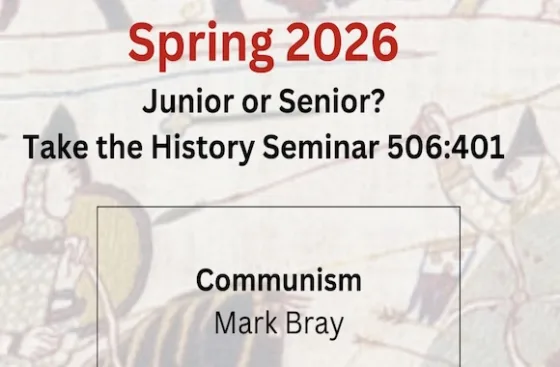
Key Takeaways
- Professor Mark Bray, author of 'Antifa: The Anti-Fascist Handbook,' is scheduled to teach two seminars at Rutgers University this spring, focusing on 'Communism' and 'Fascism and Nazism.
- Following threats and doxxings related to his teachings and advocacy, Bray fled to Spain and is currently teaching remotely.
- His controversial views on Antifa, including justifications for political violence, have generated significant backlash, prompting a TPUSA petition for his ouster.
- Bray's previous support from academic peers, along with a fundraising campaign for his family's relocation, highlights the polarized discourse surrounding his work and the political climate at universities.
Mark Bray, the “foppish son of privilege” known as “Dr. Antifa” who did “the bare minimum” for his PhD, is scheduled to teach a pair of seminars at Rutgers University this spring.
According to a Rutgers History Department Instagram post, the author of “Antifa: The Anti-Fascist Handbook” will teach “Communism” for interested juniors and seniors, and “Fascism and Nazism” which will “analyze the evolution of the regimes of Mussolini and Hitler [and] the ideas that propelled their populist authoritarianism.”
In response to alleged doxxings and death threats following a Turning Point USA petition that called for his ouster, Bray fled Rutgers — and the United States — for Spain in October. (Bray had researched “turn-of-the-century Spanish radicalism” for his doctorate and “studied Spanish revolutionaries” as an undergrad.)
Bray has since been teaching remotely; a Fox News report on his upcoming seminars doesn’t indicate if he’ll return to teach in person or remain virtual. A mid-November Guardian article notes “with the support of Rutgers” Bray can stay in Spain until the end of the “academic year.”
The TPUSA petition had asked “Why is Rutgers employing an advocate of political violence?” Group spokesman Andrew Kolvet said Bray’s book “advocates for doxing and even ‘weaponry’ to ‘stop fascism.'”
“One of our students was doxed and threatened but stayed put to defend TPUSA and their right to free speech,” Kolvet said. “It was the coward Bray who fled to Spain.”
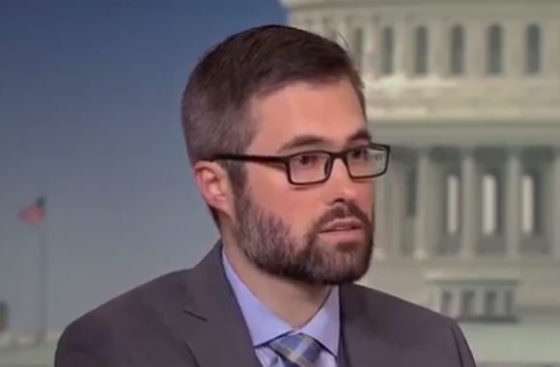
Bray (pictured) was joined in exile by his wife Yesenia Barragan, also a Rutgers history professor (“nineteenth-century Americas and Atlantic and Pacific worlds, focusing on race, slavery, and emancipation,” according to her faculty page).
A fundraiser to help the couple “leave safely” was established (on Barragan’s “behalf”), generating over $47,000 of a requested $100,000. It claims Bray was “violently targeted by conservative groups,” and that the profs “made the decision to leave the country to protect their family.”
“This move was unplanned and the sudden change is a hardship,” the fundraiser states.
Bray became an academic celebrity in 2017 after “Antifa: The Anti-Fascist Handbook” (which compares then-America to 1936 Germany) was published after the Charlottesville white-nationalist rally.
Half the earnings from the book “cover[ed] legal, medical, or personal costs” of antifascist activists, and Bray told The Chronicle of Higher Education Antifa “should be taken seriously by the public and academe.”
After Dartmouth College President Philip Hanlon (Bray’s then-boss) criticized Bray’s refusal to condemn Antifa political violence (among other things, Bray called Antifa violence “vital” and said antifascist groups’ “use of clubs or shields might be justified” in “self-defense”), over 100 Dartmouth faculty signed on to a petition supporting the professor.
During the 2020 riots after George Floyd’s killing, Bray wrote in a Washington Post op-ed that Antifa were “simply practicing ‘social revolutionary self-defense’ against police and ‘the targeted destruction of police and capitalist property.'”
He also claimed President Trump couldn’t designate Antifa a “terrorist organization” because it doesn’t have “an overarching organization with a chain of command” and depends on “loosely knit networks and informal relationships of trust and solidarity.”
This past September, Trump declared Antifa a terrorist organization.
MORE: Antifa historian defends latest round of Antifa violence: ‘self-defense,’ ‘targeted destruction’