
 EDITORS' CORNER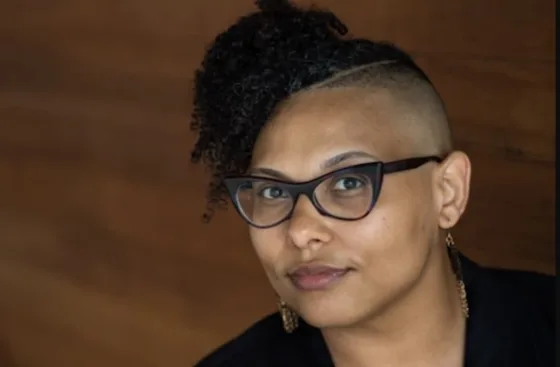
ANALYSIS: White people have supported gun rights out of fear of the ‘threat of racialized and potentially queering others’ … ?
Wellesley College recently hosted a Duke University professor of gender, sexuality & feminist studies to discuss the “biopolitical paradox” of whiteness and gun violence.
Given the department in which she works and (according to her faculty page) her specializations in feminist science and technology studies, Catherine Clune-Taylor’s advocacy for the topic includes a lot of polysyllablic and critical theory-created terms which may cause an unneeded consternation in comprehension.
This isn’t a surprise considering that as a postdoctoral researcher at Princeton, Clune-Taylor taught the course “Science After Feminism” which “investigated how feminism” challenges the notion that science “is commonly held to be the objective, empirical pursuit of natural facts.”
In her Wellesley lecture “The Necropolitics of American Childhood: Whiteness and the Biopolitical Paradox of Child Gun Death,” Clune-Taylor noted how the French-based concepts “biopolitics” and “necropolitics” relate to American gun violence, The Wellesley News reports.
Clune-Taylor took the former term, coined by (French) philosopher Michel Foucault and defined as the “political rationality which takes the administration of life and populations as its subject” (essentially how a colonizer uses its political power to control the colonized), and added a specific whiteness component to what Foucault later dubbed “biopower.”
Biopolitics, she said, often “bring about the exact opposite, increasing risks of harm and death, including for those same populations [white] they aim to protect.”
Developed by Cameroonian political theorist Achille Mbembe (a “major figure in the emergence of a new wave of French critical theory”), “necropolitics” is defined (by his book of the same name) as “the power to decide who can live and who must die, effectively turning people into ‘corpses’ or ‘living-dead’ through the creation of ‘death-worlds.'”
If that’s too verbose, here’s how Clune-Taylor tied it together, reminiscent of Rutgers’ Brittney Cooper:
Since the rise of Black Lives Matter in 2016 and the anti-lockdown, anti-mask protests during the 2020 Covid-19 Pandemic, the idea of racialized logic and racialized arguments has been more apparent than ever before. Although there is the assumption that biopolitical interventions will disproportionately harm marginalized peoples, the reality reflects that those who appear to be best off in this situation are also experiencing the negative outcomes in terms of mortality and morbidity. It is paradoxical because “white people or those who identify with whiteness are also dying.” …
Regarding guns, Clune-Taylor said white people historically have claimed “we need good guys with guns” to protect themselves and their property “from the threat of racialized and potentially queering others.”
But, she adds, increased access to guns has only led “to increased white death, particularly in Republican states” via suicide, domestic violence and accidental shootings.
The latter segment of The Wellesley News article highlights Clune-Taylor’s specific focus on school shootings, although the professor concedes such are rare occurrences and are more “a symbolic representation of the omnipresent looming threat of child gun death.”
Clune-Taylor concluded by saying “I do think that we kind of have to do both here in terms of highlighting the problems associated with school shootings, but also that guns are actually not safe anywhere,” and she encouraged students “to actively engage with organizations and services that aim to end violence, as ‘we can change the world we live in.’”
The professor certainly isn’t alone in her contention that measures during COVID were “racialized”; various academics at the time yammered that anti-maskers were “racist,” “xenophobic,” “ableist,” and “classist” … and perhaps most infamously akin to a mass shooter. (Oddly enough, we eventually found out lockdown and mask advocacy were mostly dumb.)
But more to the point, being anti-colonialists would not Foucault and Mbembe have supported the original reasons for adding the Second Amendment to the Bill of Rights? Or would the oppression studies aspect of critical theory (the Founders were still white guys living on what were previously Native lands) preclude them from doing so?
Lastly, given the demographic changes in the U.S. over the last 40 years (which progressives and Democrats wish to continue mainly via legal and illegal immigration — see below video), coupled with the mindset of more and more left-leaning judges that even violent criminals aren’t responsible for their actions due to various bullet points of oppression studies, would this then not manifest Mbembe’s necropolitics?
Members of the judiciary literally would be flaunting “the power to decide who can live and who must die” by letting known killers and assailants free to act accordingly all over again.
Chuck Schumer is demanding an immigration bill that includes “a path to citizenship for 11 million people who are here”.
— America (@america) February 27, 2026
They’re trying to legalize an illegally imported new voter base.
This has been their plan all along.
pic.twitter.com/VdRdVifReO
As such, why would anyone, white or whatever ethnicity, want to relinquish an effective means — guns — to counter such decisions?
According to her personal website, Clune-Taylor is “passionate about the rights of folks with intersex conditions to make autonomous medical decisions about their bodies,” and also “situates [her] scholarship within critical disability studies.” She previously held positions at San Diego State U. (Dept. of Women’s Studies) and Princeton (Program in Gender and Sexuality Studies).
She also is the author of “Securing Autonomously Gendered Futures: A Feminist Philosophical Defense of Intersex and Trans Kids” and is working on her next book while at Wellesley, “Eugenics and the Biopolitical Paradox of Whiteness: Whiteness as a Health Risk for All.”
MORE: White people need to ‘work’ on their ‘whiteness’: sociologist

