BUZZ
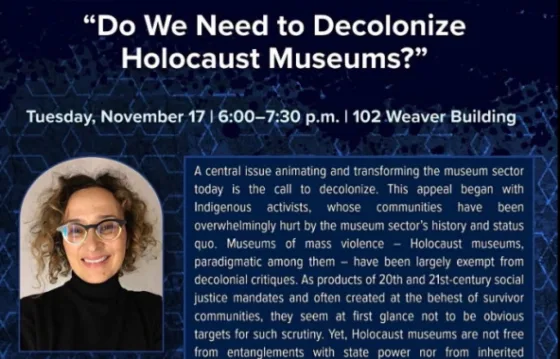
Pennsylvania State University has pledged to do better after a campus lecture titled “Do we need to decolonize Holocaust museums?” prompted massive backlash and outrage.
The talk, presented Tuesday by Erica Lehrer of Concordia University, was described in promotional materials as focused on how “Museums of mass violence – Holocaust museums, paradigmatic among them – have been largely exempt from decolonial critiques.”
“Yet, Holocaust museums are not free from entanglements with state power nor from inherited traditions and infrastructures of museum practice with their attendant biases, exclusions, and silences. This talk explores the potential value of decolonial museum theories and practices for Holocaust museums to renew and expand their social justice mandates,” its description stated.
The talk was excoriated by many online observers, who called it antisemitic and academic garbage.
“We understand the concerns regarding the external speaker’s use of the word ‘decolonization’ in the event’s title, and we recognize how hurtful it was to many in our community,” the university stated in a news release Wednesday.
“Penn State condemns all forms of antisemitism and is committed to making our Jewish students, faculty and staff feel safe, welcome and supported at Penn State. The presence of any speaker on campus in no way constitutes an endorsement by the University of the views being espoused,” it added.
The event was hosted by the university’s own Jewish Studies program.
Tommaso Milani, director of the program, said in a statement that “the term ‘decolonization’ in the context of museum collections explores the ethical questions concerning artifact collections, whose voices are represented in those collections, and how institutions can address historical injustices related to the acquisition and presentation of their collections.”
“This presentation in particular examined questions regarding how museums care for objects taken from Jewish individuals and communities and the responsibilities institutions have when pieces on display were never returned to survivors or their descendants when their descendants asked for them,” Milani stated.
“Importantly, neither the lecture nor the discussion diminished the significance of the Holocaust, the experiences of survivors, or the importance of Holocaust museums and memorials,” he added.