EDITORS' CORNER
ANALYSIS/OPINION: University of Nebraska is ‘repatriating’ artifact given to professor as a gift
Last Friday, the University of Nebraska State Museum was scheduled to “repatriate” a gift to one of its professors – a “gold tin filled with” corn and tobacco – to a Native American tribe that has claimed ownership.
A Federal Register notice announced the university’s plans to return the item. The notice is just one example of thousands of Native American artifacts that public institutions are being pushed to “repatriate” under the federal Native American Graves Protection and Repatriation Act, or NAGPRA, — and with it, comes a loss of knowledge.
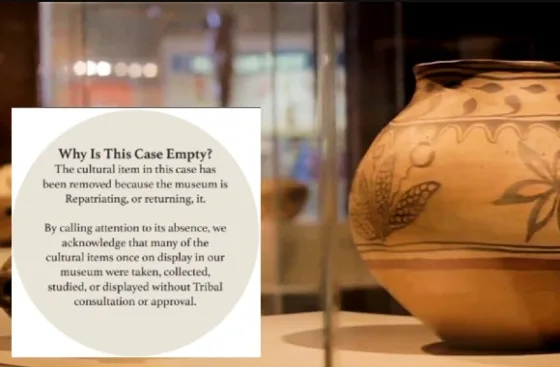
As a result, university archives and museum shelves are being emptied of tribal artifacts, making it increasingly difficult for historians and anthropologists to study these cultures and students to learn about them.
According to the University of Nebraska notice, the Omaha Tribe requested the return of the “gold tin filled with two preserved corn cobs and two packets of tobacco tied with twine,” describing it as a “sacred object.”
“The University of Nebraska State Museum has determined that: The one sacred object described in this notice is a specific ceremonial object needed by a traditional Native American religious leader for present-day adherents to practice traditional Native American religion …” the notice states.
What’s interesting is that the tin was a gift to anthropology Professor Mark Awakuni-Swetland in 2008, according to the notice. His widow donated the object to the university after his death in 2015.
This suggests the object was not obtained unethically. Awakuni-Swetland worked closely with the tribe and appeared to have great respect for and a good relationship with its members, although he was not Native American himself, according to his obituary. So, why would he keep a “needed” sacred object? and why would someone give it to him, rather than the tribe, if it was so significant?
The public, which funds the university with its tax dollars, may never know the answers.
But it’s just one example. The College Fix has covered other cases of objects as seemingly innocuous as corn cobs, eagle feathers, and even photographs of artifacts being removed under expansive federal regulations that the Biden administration created under NAGPRA.
Related, a number of public universities now also have NAGPRA policies that prohibit professors from using tribal artifacts that haven’t been repatriated yet. Some go so far as to ban showing images of these artifacts to students.
The activists leading these efforts say that “tribal knowledge” – not objective scholarship that honestly observes and records the good and bad – should dictate how these cultures are studied, who possesses their artifacts, and how outsiders are taught about them.
What will be next?
African cultures are a plausible next step. This upcoming webinar at the University of Michigan, “The care, repatriation, and restitution of African cultural property,” suggests as much.
Of course, research and the collection of artifacts should be conducted ethically, and the pursuit of knowledge – not notoriety or wealth or politics – should be the objective. Scholars also have a duty to seek to honestly understand the perspectives of the cultures that they are studying and communicate that through their work.
But what’s happening now are unnecessary restrictions that are limiting knowledge. It’s time to pull the breaks on the “repatriation” train before we lose even more.
MORE: Wyoming archeologists claim federal regs are destroying Native American research