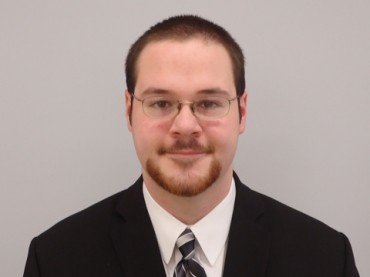
Ryan Lovelace - Butler University

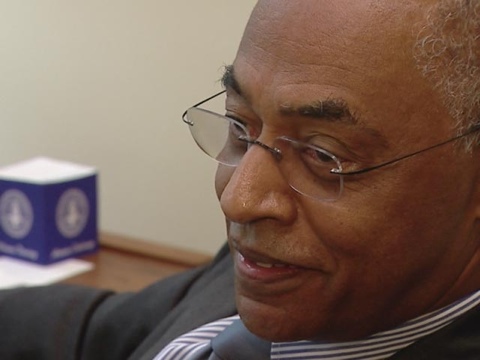
When Laura Hollis, a Notre Dame University business and law professor, looks at America’s path forward, she cannot help but see a dead end.

“Many people say to me, ‘If it gets worse than this, I’m not sure we can survive it,’ and I’m inclined to agree with them,” Hollis said in an interview with The College Fix. “It’s never been as bad as it is now.”

Hollis, who in addition to her professorship is a popular conservative columnist and political commentator, is the author of a post-election column titled “Post Mortem” that went viral across America. It was reposted on many websites, spread like wildfire across social media sites, and emailed far and wide, landing in mom-and-pop inboxes across the nation.

In fact, just as recently as Dec. 28, the popular left-leaning political blog Daily Kos posted an “open letter to Laura Hollis” denouncing her piece.

This ongoing whirlwind of a world wide web debate was prompted by Hollis’ Nov. 8 column, which analyzed the state of the union the day after President Barack Obama was re-elected.

It argued, among other things, that: conservatives are outnumbered; they’re losing the culture war; too many Americans are immature, seeking only self-gratification; and the so-called Republican War on Women played a role in the election outcome.

“America is on a horrific bender; has been for some time now,” Hollis wrote. “The warning signs of our fiscal profligacy and culture of lack of personal responsibility are everywhere – too many to mention. We need only look at other countries which have gone the route we are walking now to see what is in store. … I see the country I love headed toward its own ‘rock bottom,’ and I cannot seem to reach those who are taking it there.”

In an interview this week with The College Fix, Hollis said feedback she’s received from that piece has led her to believe millions of Americans feel as if they have no voice. But the answer, she argued, is not to cower in the corner and give up.

“Speak up,” Hollis said. “Because being polite does not mean being silent.”

First and foremost, the culture war must to be addressed, she said. It’s time to stop worrying about stepping on people’s toes or hurting people’s feelings, she said.

Some Republican and conservative commentators argued after the election the solution to regain the White House, Congress and the country is to become more moderate, acquiesce to the social norms promulgated by the Left.

Bad idea, Hollis said.

“We have to decide we need to change the tone and tenor of culture in the country,” Hollis said. “In order to change the culture, you have to be a part of the culture.”

Take, for example, the alleged War on Women. During the presidential campaign, women’s rights discussions served as a façade for something more sinister, she said. What appeared to be a discourse about access to birth control was really about expanding abortion services and physician-assisted suicide, Hollis said.

“I’m pro-better choice—all choices are not equal,” Hollis said. “If my father is suffering from advanced dementia, I don’t have the right to smother him with a pillow.”

Hollis said advances in science have provided new and startling information about life from conception through natural death that every American should learn. This is one example of the kinds of things that could help turn the culture war tide in conservatives’ favor.

Hollis said “the left” has become politically adept at demonizing people, but it is important for all Americans to understand everyone wants to make things better, she said.

While Hollis’ first point in her “Post-Mortem” work declared Americans who champion free enterprise are outnumbered by those who want free stuff, she said that did not mean throw in the towel.

“No matter where you are, that can be ground-zero for changing things,” Hollis said.

Fix contributor Ryan Lovelace is a student at Butler University.

Click here to read Hollis’ entire Post-Mortem piece.

Click here to Like The College Fix on Facebook.


IMAGE: Dave Hosford

{ 0 comments }

A political science professor at Butler University asks students to disregard their “American-ness, maleness, whiteness, heterosexuality, middle-class status” when writing and speaking in the classroom – a practice the school’s arts and sciences dean defended as a way to negate students’ inherent prejudices.

The syllabus of the course at Butler, a small Midwestern liberal arts institution in Indianapolis, spells out that students should use “inclusive language” because it’s “a fundamental issue of social justice.”

“Language that is truly inclusive affirms sexuality, racial and ethnic backgrounds, stages of maturity, and degrees of limiting conditions,” the syllabus states, referencing a definition created by the United Church of Christ.

The syllabus of the class, called Political Science 201: Research and Analysis, goes on to ask students “to write and speak in a way that does not assume American-ness, maleness, whiteness, heterosexuality, middle-class status, etc. to be the norm.” It is taught by a black, female professor.

In an interview with The College Fix, Jay Howard, dean of Butler’s College of Liberal Arts and Sciences, denied this practice essentially presumes every student who walks through the door is a racist or misogynist.

He said students must be told not to assume such prejudices because such assumptions are ingrained into the culture and remain there until questioned. With that, a liberal arts education questions these assumptions, and such questions can make for uncomfortable situations, he said.

“Sometimes in order to broaden the conversation and broaden the understandings you’ve got to risk making people uncomfortable,” Howard said. “There’s nothing about a college education that guarantees you won’t be made uncomfortable. As a matter of fact, if you’re never made uncomfortable in your college education, you’re not really getting a college education.”

Howard said the college he oversees does not want students to continue to harbor such assumptions without question, “but neither do we want to exclude the dominant group in society in our attempts to make sure that we’re leveling hierarchies.”

In twenty years, white people will no longer be the majority, but they will still be the largest ethnic group, Howard said. He said using inclusive language would help students prepare for a changing world as America becomes more diverse.

He added that American culture makes speaking inclusively difficult, and the English language is partly to blame.

“Our language doesn’t make it easy to write in ways that are inclusive,” Howard said. “We don’t have a generic singular, I mean we have he and she. There is no pronoun that is gender-neutral there.”

However, not all writing- and language-intensive classes at Butler University mandate students use such “inclusive” language.

Nancy Whitmore, director of the journalism school in the College of Communication, said in an interview with The College Fix that students in her department are encouraged to use diverse sources with a wide variety of opinions, but are not mandated to use so-called inclusive language.

Whitmore said she is unsure what educators in Butler’s College of Liberal Arts and Sciences mean when they ask students to write without assuming certain things to be the norm.

“I don’t think I could ever write from a black woman’s point of view because I’ve never been a black woman,” Whitmore said.

Indeed.

My name is Ryan Lovelace, and I dropped that politically correct political science class.

Clearly, the College of Liberal Arts and Sciences at Butler University believes its students were raised as racist and misogynist homophobes who have grown to harbor many prejudices, a stance that is both offensive and hostile to any student’s ability to learn.

As a student at an institution predominantly focused on the liberal arts, I expected to hear professors express opinions different from my own. I did not expect to be judged before I ever walked through the door, and did not think I would be forced to agree with my teachers’ worldviews or suffer the consequences.

Being judged and forced to act a certain way is antithetical to how any institution of higher education should conduct itself.

As a journalism major, I will now strive to avoid the liberal arts college as much as possible, not because the college fails to provide its students with any practical knowledge, but because the college seeks to indoctrinate its students with a hostile paradigm that views people like me—an American, white, heterosexual male from a middle-class background—as evil; whitey-righty need not attend.

Many consider higher education to be in turbulent waters because of rising tuition costs and student loan debt, but students who actually graduate may struggle even more if they view the world as Butler’s College of Liberal Arts and Sciences does.

The liberal arts college seeks to include people, but someone will always be excluded, as it is impossible to always include everyone. Furthermore, I’m not sure how to write assuming any other persona but my own. Any attempts to do so would only be offensive to people different from myself.

Lastly, the idea that people have different views from mine is not what makes me uncomfortable. The idea that I must walk, talk and act as the liberal arts college pleases does. I’ll speak as I always have and conduct myself in the way I deem fit. I think paying $40,000 a year should give me that basic right.

Fix contributor Ryan Lovelace is a student at Butler University.

IMAGE: Goto10/Flickr

Click here to Like The College Fix on Facebook.

{ 588 comments }

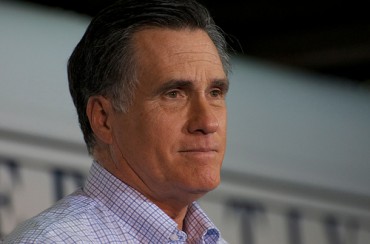
A panel of professors from across the nation converged at Purdue University to discuss immigration and the November election, but the 90-minute roundtable, billed as “nonpartisan,” quickly devolved into an attack against Mitt Romney, Republicans, immigration laws, and even America’s colonial period.

Immigration and the 2012 Election: An Academic Roundtable,” was hosted Sept. 20 by Purdue’s Center for Research on Diversity and Inclusion. It included five scholars asked to discuss how race, ethnicity, class and gender shape immigration issues, particularly with regard to the presidential election.

None of the panelists spoke in favor of Republican policies on immigration reform.

Karthick Ramakrishnan, associate professor of political science at the University of California-Riverside, argued Republican strongholds basically stagnate the free flow of immigrants to those areas through stricter laws and enforcement.

For example, some of the tightest immigration laws hail from Arizona, a state largely controlled by Republican lawmakers, he said.

“The factor that consistently matters is how Republican an area is,” Ramakrishnan said. “Basically, you had a conservative insurrection on immigration well before the Tea Party insurrection in 2009.”

Ramakrishnan said this factor hurts Republican presidential nominee Mitt Romney, as it’s difficult for him to get the support of voters sympathetic to illegal immigration causes.

Underscoring that, Romney also failed to provide a good explanation of his immigration plan at a recent Univision forum, said Lisa Garcia Bedolla, associate professor of social and cultural studies at the University of California-Berkeley.

She said she believes Romney treated Latinos disrespectfully by giving what she contends was a vague answer that skirted the issue.

“I did have a moment as a Latino watching Univision saying like, ‘we’re not that stupid,’” Bedolla said. “Like, you think that you can sort of back pedal around this question, but you’re talking about stuff that’s really really important.”

Ramakrishnan took it one step further, saying at least Romney side-stepped the issue; in most states, Republicans who call for immigration reform are zealous about it, and meet with support from constituents.

“You have many states where…you can go immigrant bash and do just fine,” Ramakrishnan said.

Diane Thomas, president and CEO of the International Center of Indianapolis, echoed that sentiment, noting Indiana is one such state where Republican lawmakers’ immigration reform efforts are met with favor.

For example, she said Sen. Richard Lugar (R-Ind.) lost his seat in large part because of his support for the Dream Act, a bipartisan amnesty proposal for illegal immigrants. Indeed, one of the best ways to get on the front page of newspapers in Indiana is to propose anti-immigration legislation, she said.

Thomas called for more lenient immigration laws, and said the U.S. must follow Canada’s model on immigration or face the consequences. She said immigrants will move to Canada for jobs because they won’t be able to obtain work visas here, and that will ultimately hurt the U.S. economy.

“They’re gonna cream us here if, you know, we don’t get with the program,” Thomas said. “Look at all the international students who are here—you gotta leave and go work in Canada because you’re gonna get a visa you won’t get here. How stupid is that for us?”

Ramakrishnan said he believes even Canada’s immigration laws are too strict. He said all of America should embrace the politics emulated in Chicago, where he believes pro-immigrant, pro-union policies rule the day.

At one point a student asked why President Barack Obama has deported more illegal immigrants in four years than Bush did in eight. Garcia Bedolla largely blamed the previous administration. She said it was caused by the continuation and acceleration of a President George W. Bush-era policy that Obama chose not to stop.

Niambi Carter, assistant professor of African American studies at Temple University, said the problem of immigration is much greater than transgressions or politicians’ flawed policies – it is that America is inherently rooted in injustice.

“We like to treat justice as if it’s something that’s always there, there’s just been momentary slippages in the application of these principles that we supposedly live by, instead of treating them as real problems that are deeply embedded from the founding,” Carter said. “I don’t know how you get a just nation with slavery and Native American rule, I don’t.”

Fix contributor Ryan Lovelace is a student at Butler University.

IMAGE: Jon “Satch” Satriale, Flickr

Click here to Like The College Fix on Facebook.

{ 0 comments }

Two senators this week lambasted the way in which public universities track data and called for sweeping reforms, but some questioned whether a more detailed approach might jeopardize students’ privacy.

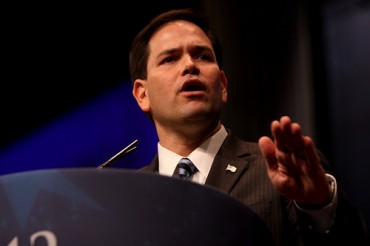
In a bipartisan show of support, Sen. Ron Wyden, D-Ore., and Sen. Marco Rubio, R-Fla., said they hope to upgrade the way in which universities track information on what individual campuses have to offer, such as job skills, careers created, and information on expected financial outcomes of various academic disciplines.

As it stands, the senators said at a news conference in Washington D.C., the data is tracked on a federal level, offers no streamlined standards, and paints an incomplete picture.

“You’ve really got a system that is failing a lot of families,” Wyden said. “At best, the information that students get today is incomplete.”

The senators said their Student Right to Know Before You Go Act would help replace the U.S. Department of Education’s current system for tracking data at universities across the nation with state-based programs individually configured to give more specified and useful information to students and parents, such as how much debt they may have accumulated by the time they graduate and future earnings potential.

Rubio compared the plan’s requirement for states to produce such information to nutrition labels the government requires on food, which he said gives him the opportunity to decide what he puts in his body.

Not everyone is thrilled with the senators’ proposal, however.

Obtaining detailed information may require unnecessary surveillance of students, said Amy Jones, education policy counsel and senior advisor for the House Committee on Education and the Workforce. Jones also spoke at the event, hosted by the American Enterprise Institute and New America Foundation.

Jones said she foresaw a nightmare scenario in which the government inspects intimate details about an individual throughout the course of their life, and then mandates that children be raised a certain way based upon information gathered about successful people’s childhoods.

“It’s not enough just to say, ‘Oh, information technology has improved … so, therefore, we don’t need to worry about student privacy,’ ” Jones said. “The issue is that the federal government just doesn’t need to know that much information about an individual person.”

Rubio said Jones misses the point.

“This is not a mandate,” he said. “This is not designed to discourage kids from going to one school over another, or going in to one career over another. It’s simply information that allows us to make wise decisions.”

Rubio said the act would extend those wise decisions to how lawmakers plan to deal with the nation’s debt. Likewise, Wyden noted education reform will be central to the debate about the impending “fiscal cliff,” or the prediction of a greater economic slowdown if the government permits the expiration of tax cuts and some spending reductions.

“After sequestration, the first of many sequestrations to come, we’re going to be living in the politics of scarcity and we’re going to choose between Medicare and college,” said Dr. Anthony Carnevale, director of The Georgetown University Center on Education and the Workforce, who also spoke during the event.

Rubio said building an educated and prepared workforce goes hand-in-hand with producing the economic growth necessary to deal with the nation’s climbing debt.

“I think that we have a national interest in insuring that we are producing a workforce capable of fueling [that] kind of economic growth,” Rubio said. “If we don’t grow this economy, we will never get our hands around this debt problem.”

In a joint op-ed published this week in USA Today, Wyden and Rubio continued their efforts to push for the act’s success, in part by dissing annual college rankings put out by organizations such as U.S. News & World Report.

“Too often, these reports … overlook inputs like debt burdens and post-graduation success in finding good-paying, meaningful jobs,” the senators wrote. “ … This is a little bit shocking considering we live in a data driven world. … Yet students don’t have access to data that could help them make real-world decisions about their futures and policymakers are given an incomplete picture when making decisions about how to best allocate tax dollars.”

Fix contributor Ryan Lovelace is a student at Butler University.

IMAGE: Gage Skidmore, Flickr

Click here to Like The College Fix on Facebook.

{ 1 comment }